Dr. David Kulla, DC provides individualized evaluation and conservative care for plantar fasciitis, flat feet, running injuries, and other foot and lower-extremity conditions at Synergy Wellness Chiropractic & Physical Therapy in New York City.
With more than 26 years of clinical experience and a background in endurance sports, Dr. Kulla understands how foot and lower-extremity mechanics can affect walking, running, training, and daily activity.
Our Manhattan office is located at 237 First Avenue near East 14th Street, convenient to Union Square, the East Village, and Gramercy.
What Is Plantar Fasciitis?
Plantar fasciitis is one of the most common causes of heel pain. The plantar fascia is a thick band of tissue that runs along the bottom of the foot from the heel toward the toes and helps support the arch.
Symptoms typically include pain near the bottom or inner portion of the heel. Pain is often most noticeable with the first few steps in the morning, after prolonged sitting, or after long periods of standing or walking.
Some clinicians also use the term plantar fasciopathy because chronic cases often involve degenerative changes in the tissue rather than simple inflammation alone.
Common Symptoms of Plantar Fasciitis
Typical symptoms may include:
- Sharp or aching heel pain
- Pain with the first steps in the morning
- Pain after sitting for a prolonged period
- Heel pain after prolonged standing or walking
- Symptoms aggravated by running or jumping
- Tightness in the calf or Achilles tendon
- Tenderness along the bottom of the heel
What Causes Plantar Fasciitis?
Plantar fasciitis usually develops from a combination of loading, activity, tissue capacity, and biomechanical factors rather than from one single cause.
Contributing factors may include:
- Sudden increases in walking or running volume
- Long periods of standing on hard surfaces
- Running or other repetitive impact activities
- Tight calf muscles or limited ankle mobility
- Changes in footwear
- Foot mechanics such as overpronation
- High arches or flat feet
- Reduced foot or lower-extremity strength
- Increased body weight
Not everyone with flat feet develops plantar fasciitis, and not everyone with plantar fasciitis has flat feet.
What Are Flat Feet?
Flat feet, also called pes planus, occur when the arch of the foot is lower than usual while standing.
Flat feet are common, and many people with low arches have no pain or functional limitations at all. Treatment is usually considered when flat feet are associated with pain, fatigue, altered walking or running mechanics, or other functional problems.
A low arch by itself does not automatically mean that something is wrong or that custom orthotics are required.
Pronation and Foot Mechanics
Pronation is a normal motion of the foot that occurs during walking and running. It helps the foot adapt to the ground and absorb forces.
In some people, excessive or poorly controlled pronation may contribute to foot or lower-extremity symptoms, particularly when combined with weakness, limited ankle mobility, training errors, or repetitive stress.
The goal of treatment is not to eliminate normal pronation, but to identify whether foot mechanics are contributing to the patient’s symptoms and function.
Can Foot Problems Affect the Knee, Hip or Lower Back?
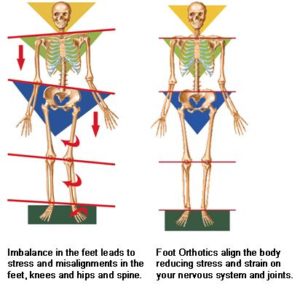
Foot and ankle mechanics can influence movement throughout the lower extremity. Changes in gait, ankle mobility, foot strength, or pain may alter how forces are transferred through the knee and hip.
However, foot posture alone should not automatically be blamed for knee, hip, or leg pain or lower-back pain.
When symptoms involve several regions, Dr. Kulla evaluates the entire lower extremity rather than focusing only on the painful foot.
Running Injuries
Running injuries frequently occur when training load increases faster than the body can adapt.
Common problems may include:
- Plantar fasciitis
- Achilles tendon pain
- Calf strains
- Shin pain
- Knee pain
- Hip pain
- Foot and ankle overuse injuries
- Stress reactions or stress fractures
Running injuries should be evaluated according to the tissues involved, training history, footwear, strength, mobility, recovery, and running volume rather than assuming every running injury is caused by a flat foot or a particular shoe.
Dr. Kulla’s Endurance Sports Background
Dr. Kulla has personal experience with endurance training and the demands it places on the feet and lower extremities. His athletic background includes triathlon, swimming, and competitive tennis.
This experience contributes to his interest in evaluating runners, athletes, and active adults with foot, ankle, knee, hip, and lower-extremity problems.
How Are Foot and Running Injuries Evaluated?
Dr. David Kulla, DC evaluates each patient individually.
An examination may include:
- Health and injury history
- Location and pattern of foot pain
- Foot and ankle range of motion
- Calf and Achilles flexibility
- Foot and lower-extremity strength
- Walking or gait assessment
- Evaluation of the knees, hips, and pelvis when appropriate
- Review of footwear and training habits
- Assessment of arch and foot mechanics
Most cases of plantar fasciitis can be diagnosed through the patient’s history and physical examination. X-rays, MRI, ultrasound, or other imaging may be considered when another condition such as a stress fracture or significant soft-tissue injury is suspected.
3D Foot Scanning
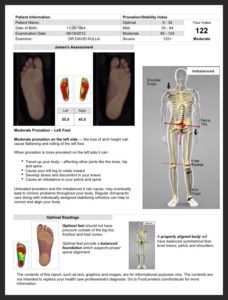
Synergy Wellness uses three-dimensional foot scanning technology to help evaluate foot shape and assist with the fitting of custom orthotics when they are clinically appropriate.
The scan provides information about the contour and support characteristics of the feet, but it is used together with the patient’s history and physical examination rather than as a stand-alone diagnostic test.
Do You Need Custom Orthotics?
Not every patient with foot pain or flat feet requires custom orthotics.
Some patients respond well to supportive shoes or over-the-counter inserts. Others with significant foot deformity, persistent symptoms, unusual biomechanics, or specific activity demands may benefit from a custom device.
When appropriate, Synergy Wellness offers custom foot orthotics based on the patient’s foot structure, examination findings, symptoms, footwear, and activity requirements.
The purpose of an orthotic is to improve comfort, redistribute pressure, and provide appropriate support. Orthotics should not be presented as necessary for every person with flat feet.
Conservative Treatment for Plantar Fasciitis
Most plantar fasciitis is initially treated conservatively.
Treatment may include:
- Temporary modification of aggravating activities
- Plantar fascia stretching
- Calf and Achilles stretching
- Foot and ankle strengthening
- Supportive footwear
- Heel cups or arch supports
- Orthotics when appropriate
- Ice for symptom relief
- Night splints in selected patients
- Physical therapy and rehabilitation
- Gradual return to walking or running
Improvement can take time, particularly when the condition has been present for many months.
Physical Therapy for Foot and Running Injuries
Physical therapy may help address strength, flexibility, mobility, gait, and training factors contributing to plantar fasciitis or other lower-extremity injuries.
Rehabilitation may include strengthening the intrinsic foot muscles, calf and lower-leg muscles, improving ankle mobility, and gradually rebuilding tolerance to walking, running, or sports.
Should You Stop Running?
Not every runner with plantar fasciitis needs to stop running completely.
Training volume may need to be temporarily reduced or modified depending on symptom severity. In some cases, switching temporarily to lower-impact activities such as cycling or swimming may help maintain fitness while symptoms improve.
Return to running should be gradual and based on symptom response rather than a fixed timetable.
When Foot Pain Requires Medical Evaluation
Seek prompt medical evaluation for:
- Inability to bear weight after an injury
- Significant swelling, bruising, or deformity
- Suspected fracture
- Persistent numbness or progressive weakness
- Redness, warmth, fever, or possible infection
- Sudden calf swelling or unexplained shortness of breath
- Persistent pain that does not improve with appropriate conservative care
Schedule a Foot or Running Injury Evaluation in NYC
If you are experiencing heel pain, plantar fasciitis, flat-foot related symptoms, running pain, or other foot and lower-extremity problems, Dr. David Kulla, DC can evaluate your condition and help determine appropriate conservative treatment options.
Synergy Wellness Chiropractic & Physical Therapy
237 First Avenue, 5th Floor
New York, NY 10003
Near East 14th Street in Manhattan
Call (212) 533-4900 or book an appointment online.
Dr. David Kulla, DC provides individualized evaluation and conservative care for plantar fasciitis, flat feet, running injuries, and other foot and lower-extremity conditions at Synergy Wellness Chiropractic & Physical Therapy in New York City.
With more than 26 years of clinical experience and a background in endurance sports, Dr. Kulla understands how foot and lower-extremity mechanics can affect walking, running, training, and daily activity.
Our Manhattan office is located at 237 First Avenue near East 14th Street, convenient to Union Square, the East Village, and Gramercy.
What Is Plantar Fasciitis?
Plantar fasciitis is one of the most common causes of heel pain. The plantar fascia is a thick band of tissue that runs along the bottom of the foot from the heel toward the toes and helps support the arch.
Symptoms typically include pain near the bottom or inner portion of the heel. Pain is often most noticeable with the first few steps in the morning, after prolonged sitting, or after long periods of standing or walking.
Some clinicians also use the term plantar fasciopathy because chronic cases often involve degenerative changes in the tissue rather than simple inflammation alone.
Common Symptoms of Plantar Fasciitis
Typical symptoms may include:
- Sharp or aching heel pain
- Pain with the first steps in the morning
- Pain after sitting for a prolonged period
- Heel pain after prolonged standing or walking
- Symptoms aggravated by running or jumping
- Tightness in the calf or Achilles tendon
- Tenderness along the bottom of the heel
What Causes Plantar Fasciitis?
Plantar fasciitis usually develops from a combination of loading, activity, tissue capacity, and biomechanical factors rather than from one single cause.
Contributing factors may include:
- Sudden increases in walking or running volume
- Long periods of standing on hard surfaces
- Running or other repetitive impact activities
- Tight calf muscles or limited ankle mobility
- Changes in footwear
- Foot mechanics such as overpronation
- High arches or flat feet
- Reduced foot or lower-extremity strength
- Increased body weight
Not everyone with flat feet develops plantar fasciitis, and not everyone with plantar fasciitis has flat feet.
What Are Flat Feet?
Flat feet, also called pes planus, occur when the arch of the foot is lower than usual while standing.
Flat feet are common, and many people with low arches have no pain or functional limitations at all. Treatment is usually considered when flat feet are associated with pain, fatigue, altered walking or running mechanics, or other functional problems.
A low arch by itself does not automatically mean that something is wrong or that custom orthotics are required.
Pronation and Foot Mechanics
Pronation is a normal motion of the foot that occurs during walking and running. It helps the foot adapt to the ground and absorb forces.
In some people, excessive or poorly controlled pronation may contribute to foot or lower-extremity symptoms, particularly when combined with weakness, limited ankle mobility, training errors, or repetitive stress.
The goal of treatment is not to eliminate normal pronation, but to identify whether foot mechanics are contributing to the patient’s symptoms and function.
Can Foot Problems Affect the Knee, Hip or Lower Back?
Foot and ankle mechanics can influence movement throughout the lower extremity. Changes in gait, ankle mobility, foot strength, or pain may alter how forces are transferred through the knee and hip.
However, foot posture alone should not automatically be blamed for knee, hip, or leg pain or lower-back pain.
When symptoms involve several regions, Dr. Kulla evaluates the entire lower extremity rather than focusing only on the painful foot.
Running Injuries
Running injuries frequently occur when training load increases faster than the body can adapt.
Common problems may include:
- Plantar fasciitis
- Achilles tendon pain
- Calf strains
- Shin pain
- Knee pain
- Hip pain
- Foot and ankle overuse injuries
- Stress reactions or stress fractures
Running injuries should be evaluated according to the tissues involved, training history, footwear, strength, mobility, recovery, and running volume rather than assuming every running injury is caused by a flat foot or a particular shoe.
Dr. Kulla’s Endurance Sports Background
Dr. Kulla has personal experience with endurance training and the demands it places on the feet and lower extremities. His athletic background includes triathlon, swimming, and competitive tennis.
This experience contributes to his interest in evaluating runners, athletes, and active adults with foot, ankle, knee, hip, and lower-extremity problems.
How Are Foot and Running Injuries Evaluated?
Dr. David Kulla, DC evaluates each patient individually.
An examination may include:
- Health and injury history
- Location and pattern of foot pain
- Foot and ankle range of motion
- Calf and Achilles flexibility
- Foot and lower-extremity strength
- Walking or gait assessment
- Evaluation of the knees, hips, and pelvis when appropriate
- Review of footwear and training habits
- Assessment of arch and foot mechanics
Most cases of plantar fasciitis can be diagnosed through the patient’s history and physical examination. X-rays, MRI, ultrasound, or other imaging may be considered when another condition such as a stress fracture or significant soft-tissue injury is suspected.
3D Foot Scanning
Synergy Wellness uses three-dimensional foot scanning technology to help evaluate foot shape and assist with the fitting of custom orthotics when they are clinically appropriate.
The scan provides information about the contour and support characteristics of the feet, but it is used together with the patient’s history and physical examination rather than as a stand-alone diagnostic test.
Do You Need Custom Orthotics?
Not every patient with foot pain or flat feet requires custom orthotics.
Some patients respond well to supportive shoes or over-the-counter inserts. Others with significant foot deformity, persistent symptoms, unusual biomechanics, or specific activity demands may benefit from a custom device.
When appropriate, Synergy Wellness offers custom foot orthotics based on the patient’s foot structure, examination findings, symptoms, footwear, and activity requirements.
The purpose of an orthotic is to improve comfort, redistribute pressure, and provide appropriate support. Orthotics should not be presented as necessary for every person with flat feet.
Conservative Treatment for Plantar Fasciitis
Most plantar fasciitis is initially treated conservatively.
Treatment may include:
- Temporary modification of aggravating activities
- Plantar fascia stretching
- Calf and Achilles stretching
- Foot and ankle strengthening
- Supportive footwear
- Heel cups or arch supports
- Orthotics when appropriate
- Ice for symptom relief
- Night splints in selected patients
- Physical therapy and rehabilitation
- Gradual return to walking or running
Improvement can take time, particularly when the condition has been present for many months.
Physical Therapy for Foot and Running Injuries
Physical therapy may help address strength, flexibility, mobility, gait, and training factors contributing to plantar fasciitis or other lower-extremity injuries.
Rehabilitation may include strengthening the intrinsic foot muscles, calf and lower-leg muscles, improving ankle mobility, and gradually rebuilding tolerance to walking, running, or sports.
Should You Stop Running?
Not every runner with plantar fasciitis needs to stop running completely.
Training volume may need to be temporarily reduced or modified depending on symptom severity. In some cases, switching temporarily to lower-impact activities such as cycling or swimming may help maintain fitness while symptoms improve.
Return to running should be gradual and based on symptom response rather than a fixed timetable.
When Foot Pain Requires Medical Evaluation
Seek prompt medical evaluation for:
- Inability to bear weight after an injury
- Significant swelling, bruising, or deformity
- Suspected fracture
- Persistent numbness or progressive weakness
- Redness, warmth, fever, or possible infection
- Sudden calf swelling or unexplained shortness of breath
- Persistent pain that does not improve with appropriate conservative care
Schedule a Foot or Running Injury Evaluation in NYC
If you are experiencing heel pain, plantar fasciitis, flat-foot related symptoms, running pain, or other foot and lower-extremity problems, Dr. David Kulla, DC can evaluate your condition and help determine appropriate conservative treatment options.
Synergy Wellness Chiropractic & Physical Therapy
237 First Avenue, 5th Floor
New York, NY 10003
Near East 14th Street in Manhattan
Call (212) 533-4900 or book an appointment online.